
How Long Before You Can Park on a New Concrete Driveway?
You can park a passenger car on new concrete after 7 days. Heavy trucks and trailers should wait 10–14 days. Here's the full timeline and what happens if you rush it.
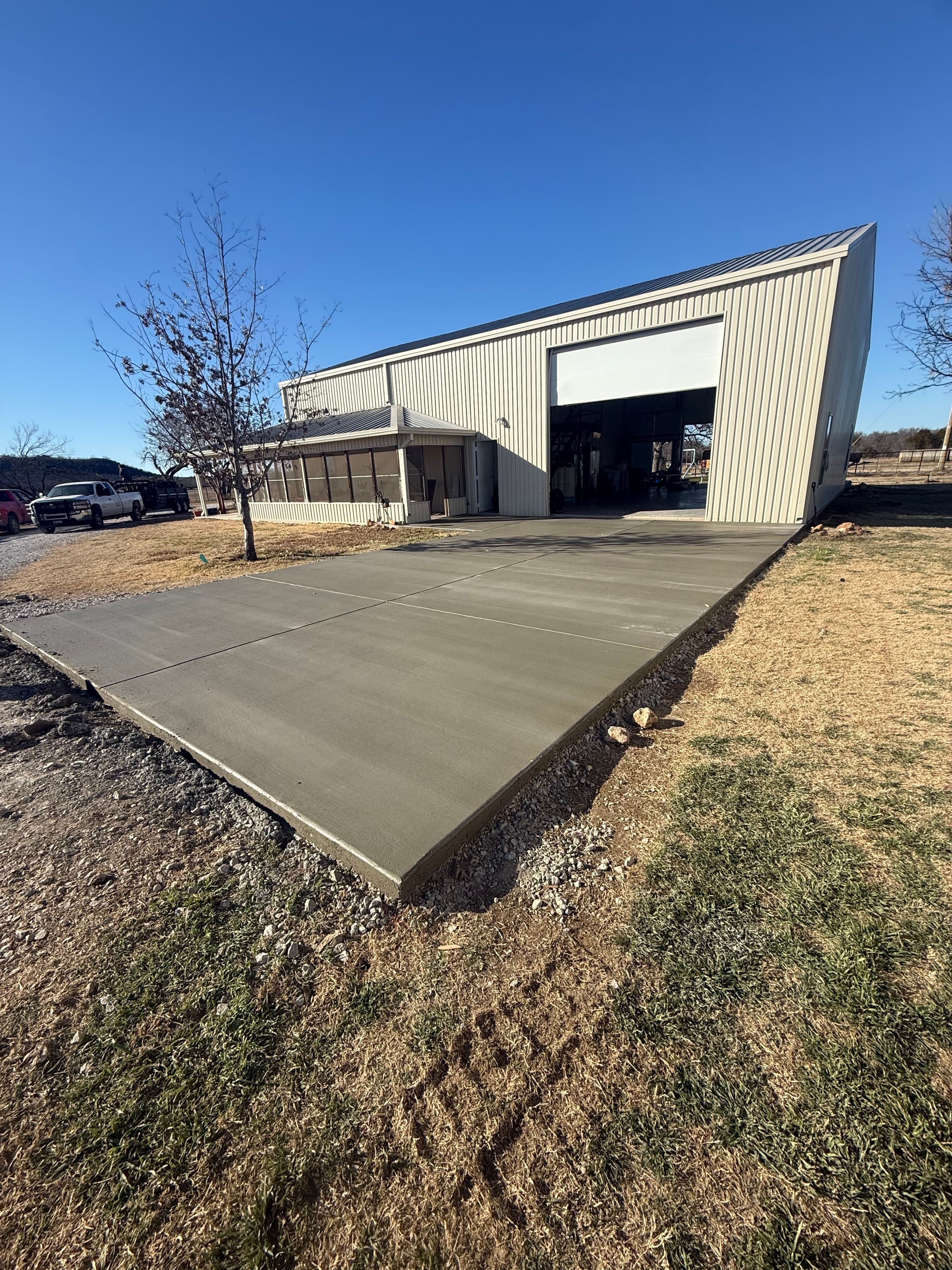
Wait 7 days before parking a passenger car on new concrete. For heavy trucks, trailers, or an RV, wait 10–14 days. That's the short version — but the reasoning matters, especially in North Texas where summer heat changes how you need to treat a fresh pour. If you're still in the planning stage, here's what to expect from our concrete driveway service.
The Full Timeline
Concrete doesn't cure overnight. The chemical process that gives it strength — called hydration — takes about a month to reach full capacity. Here's what each stage means for your driveway:
24 hours — The concrete has set enough that you can walk on it. Step gently. No dragging furniture, no pets with claws scrambling around, no kids on bikes. The surface scuffs easily at this point.
3–5 days — It's firmer, but still gaining strength. Keep vehicles off it. Foot traffic is fine.
7 days — This is the threshold we tell every customer: concrete has reached roughly 70% of its design strength, which is enough for passenger cars and light SUVs. Avoid parking in the same spot every day for a few more weeks — spread the load around.
10–14 days — This is the window we recommend for heavy trucks, trailers, and RVs. By this point the concrete has enough strength to handle the extra load without risk of marks or damage.
28 days — Full cure. The concrete has reached its design strength and you can treat it like any established driveway from here on out.
What Happens If You Park Too Early
The damage from parking too early isn't always obvious right away. What you'll typically see:
- Tire indentations — Soft concrete deforms under concentrated weight. The marks become permanent as the concrete finishes curing around the impression.
- Edge cracking — The edges of a driveway are the thinnest and most vulnerable point. Driving over them before 7 days is one of the fastest ways to chip or crack the perimeter.
- Surface spalling — In hot weather, the surface can flake if it's loaded before it's ready. Once the top layer separates, it tends to keep going.
None of this is covered under a repair warranty. The damage is yours to fix.
Does Texas Heat Change the Timeline?
Yes and no. High summer temperatures speed up how fast the surface feels hard — but full internal strength still takes the same amount of time. In our experience pouring in North Texas summers, extreme heat can actually work against you by drying the surface too fast before it's had time to cure properly.
If your driveway was poured in summer, keep it moist for the first week. A slow spray from a garden hose in the evenings helps. Avoid parking on it during the hottest part of the afternoon in that first week — hot asphalt tires on soft concrete is a reliable way to leave marks.
A Few Things Worth Knowing
- Contractor mixes vary. A 4,000 PSI mix used in commercial work gains strength faster than a standard 3,000 PSI residential mix. If you're not sure what was used on your pour, ask — it affects the timeline. On all of our residential driveways we'll tell you exactly what mix went in.
- Color and stamped concrete need more care. Decorative finishes have a thinner, more delicate surface layer. Give stamped or colored driveways an extra 3–5 days before vehicle traffic.
- Sealing too early locks in moisture. We always tell customers to wait the full 28 days before sealing. Sealing before full cure traps moisture that needs to escape.
If you had Pillars Concrete pour your driveway and have questions about your specific timeline, reach out and ask. Every pour is a little different and we're happy to give you a straight answer.
Frequently Asked Questions
- Can I walk on my new concrete driveway the same day?
- No. Wait at least 24 hours before walking on new concrete. Even then, step carefully and avoid dragging your feet or dropping heavy items. The surface is still soft and marks easily in the first day or two.
- What happens if I park on concrete before it's fully cured?
- Parking too early can leave permanent tire indentations, surface cracks, or edge spalling — especially on hot Texas afternoons when the surface is softer. These marks don't always show up immediately but can appear as the concrete continues to harden around the damaged area.