
How Long Does a Concrete Driveway Last in North Texas?
A properly poured concrete driveway in North Texas should last 25–30 years. Here's what affects lifespan and what you can do to extend it.
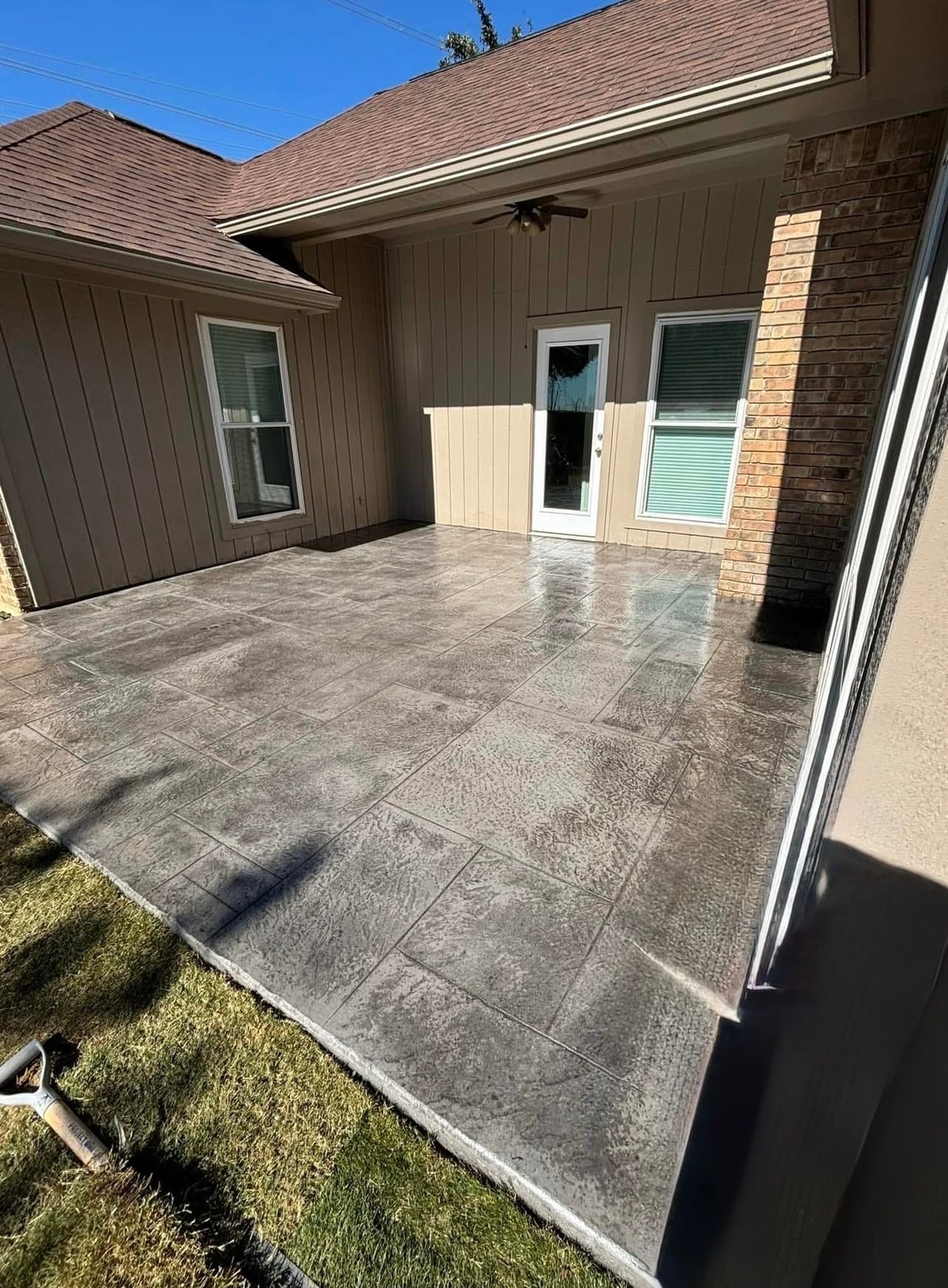
A concrete driveway is one of the longest-lasting surfaces you can put in front of your home — but only if it's poured correctly and the sub-base is prepared properly. Here's what we see in North Texas after decades of concrete work.
What to Expect from a Well-Poured Driveway
A 4-inch concrete driveway on a properly compacted sub-base, with control joints cut in the right places, should give you 25 to 30 years before any major work is needed. That number drops fast if:
- The sub-base wasn't compacted before the pour
- Control joints were skipped or placed too far apart
- The slab is only 3 inches thick (common on cheap bids)
- Water drains toward the slab instead of away from it
North Texas clay soil is harder on concrete than most regions. The soil expands when wet and shrinks when dry, which puts constant stress on a slab from below. That's why proper base prep and joint placement matters more here than in areas with stable sandy soil.
Control Joints: The Most Overlooked Factor
Control joints are the lines you see cut into a driveway — they're intentional weak points that tell the slab where to crack as it moves. When joints are placed every 8 to 10 feet and cut to the right depth, visible cracking stays in those joints and out of the middle of your driveway.
When joints are skipped, the slab picks its own crack locations — usually somewhere inconvenient.
What Shortens Driveway Life
Tree roots — If a tree is within 10 feet of a driveway, roots will find the slab eventually. We've torn out plenty of driveways buckled by roots that were invisible when the original work was done.
Heavy vehicles on light concrete — A 4-inch slab was designed for cars, not loaded trailers or diesel trucks. If you're regularly parking a truck over 10,000 lbs, the driveway should be 5–6 inches with heavier reinforcement.
Water intrusion — Concrete isn't waterproof. Water that pools on the surface or runs under the slab from a drainage problem will accelerate cracking and sub-base erosion.
When to Repair vs. Replace
Hairline cracks that are flat and stable — seal them, move on. They're cosmetic.
Cracks wider than ¼ inch, sections that have shifted or heaved, or any area where the slab flexes when you step on it — those need to be removed. Filling structural cracks with surface filler is temporary. It won't stop the underlying movement.
If more than a third of your driveway has significant cracking or heaving, replacement is usually more cost-effective than patching section by section.
Our Standard for New Driveways
Every residential driveway we pour gets:
- Proper excavation and compacted base
- Control joints placed to code
- Minimum 4-inch pour (5–6 inch available for heavy use)
- Steel reinforcement or fiber reinforcement on request
If you're getting bids on a new driveway and one bid is significantly cheaper than the others, ask what thickness they're quoting. That's usually where the difference is.
Frequently Asked Questions
- How long does a concrete driveway last?
- A concrete driveway poured to 4 inches thick with proper sub-base preparation should last 25 to 30 years in North Texas. Heavier vehicle use or poor drainage can reduce that. Driveways that see RV or truck traffic regularly should be poured at 5–6 inches.
- What causes concrete driveways to crack?
- The most common causes in North Texas are expansive clay soil shifting under the slab, tree roots, improper joint spacing, and concrete poured too thin. Hairline cracks are normal as concrete cures — wide or heaving cracks indicate a sub-base or drainage problem.
- Can a cracked concrete driveway be repaired?
- Minor cracks can be filled with a concrete crack filler to stop water intrusion. Wide cracks or sections where the slab has shifted or heaved typically need to be removed and repoured. Resurfacing over major structural cracks doesn't last.
- How thick should a residential driveway be?
- Four inches is the standard for passenger vehicles. If you park a truck, RV, or trailer regularly, go to 5 or 6 inches. The extra material cost is small compared to repouring a failed slab.