
How to Get Your Concrete Patio Ready for Winter in North Texas
Fall is the last easy window to clean, seal, and fix cracks in a concrete patio before the first North Texas freeze. What to check, fix, and leave alone.
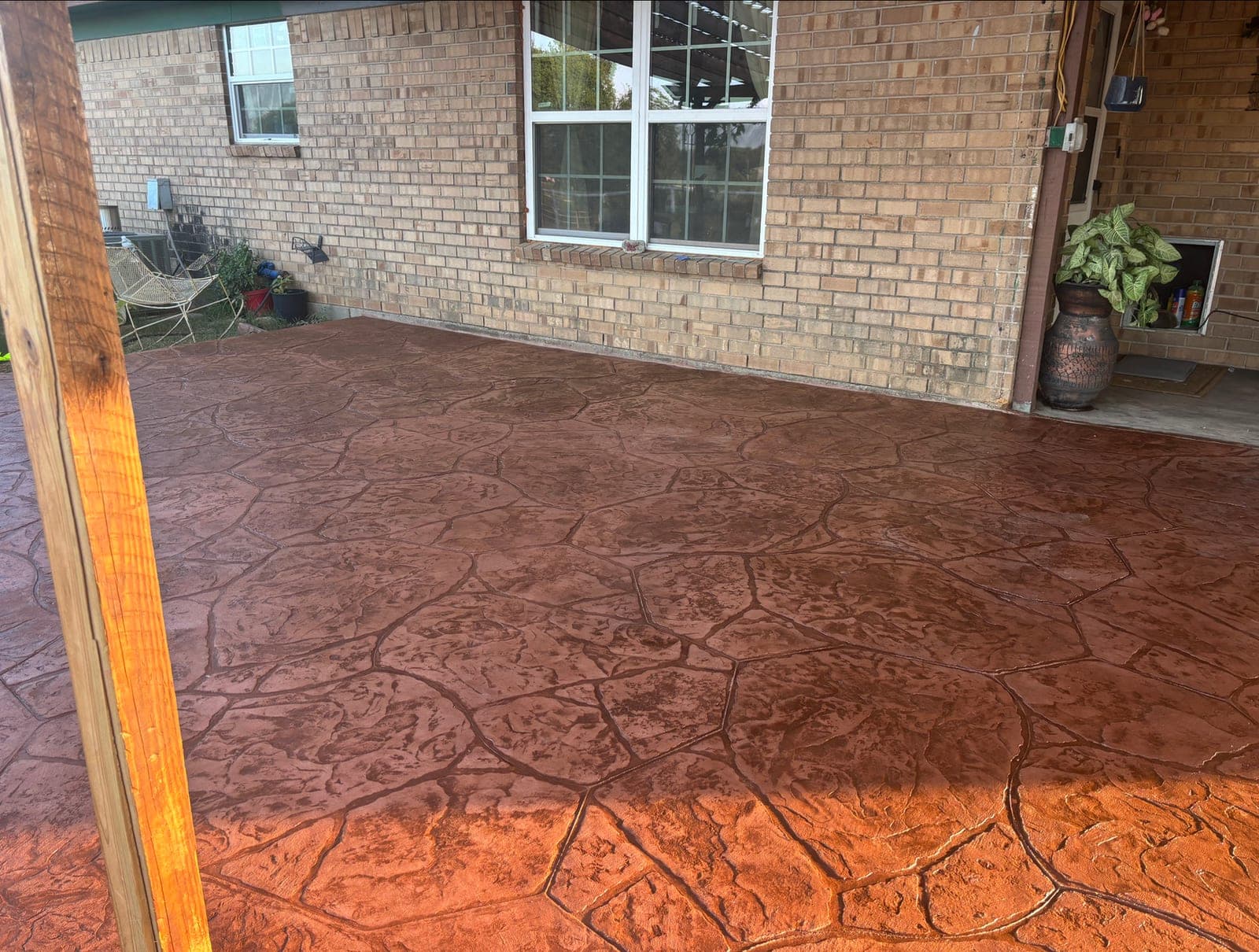
Nobody looks at a patio in August. By September you're back out on it, and it's showing what a North Texas summer does to concrete: sun-faded color, a gray film where the sealer used to be, a few new hairline cracks, maybe a corner that holds water after a storm.
September is also the last easy month to fix all of that. Sealers need moderate temperatures and dry days to cure, and the first freeze averages November 22 in Dallas–Fort Worth and about a week earlier in Mineral Wells, around November 15. Here is what to check, what to fix, and what to leave alone.
Start by clearing it and washing it
Move the furniture, the grill, and the planters off the slab so you can see all of it. Sweep, then wash it with a mild detergent and a stiff brush or a garden hose. A pressure washer works on plain broom-finish concrete if you keep the nozzle moving and a foot or so off the surface. Go easy on stamped or stained concrete: high pressure up close will strip what's left of the sealer and can etch the color.
While it's wet, do the water test. Sprinkle a little water on a dry section. If it beads up, the sealer is still doing its job. If it darkens the surface and soaks in within a minute or two, the sealer is gone and the concrete is drinking every rain that lands on it.
Look for three things while it's clean: dull, chalky patches where the color has faded; low spots where water pools and stays; and cracks. Note where they are. That's your list.
Cracks: which ones matter
Hairline cracks are normal. Concrete shrinks a little as it cures, and the clay soil under it swells with rain and shrinks in drought, so most North Texas slabs pick up a few thin cracks over the years. A summer like this one makes them show. Don't leave them open through the winter. Water that gets into a crack and freezes expands, and that's how a hairline crack turns into a chipped edge by spring. Filling them is a call to us, not a weekend project: it's quick, and we'll tell you on the spot whether the slab needs a reseal while we're there.
Wider cracks are a different story. If a crack is wider than a quarter inch, if one side sits higher than the other, or if a corner of the patio has dropped, the concrete isn't the problem. The ground under it is. In this part of Texas that's almost always the clay drying out and pulling away from the slab edges, or a sub-base that was never compacted in the first place. We wrote about why that happens under the slab. Sealing over a moving crack won't stop it. A sunken section needs the ground fixed and the section re-poured, or a resurfacing overlay once it's stable.
Seal it while the weather still cooperates
Sun and water are what wear out concrete in Texas. A sealer handles both: it blocks UV so the color doesn't fade, and it keeps water on the surface instead of in the pores, which is what protects the slab through freeze-and-thaw nights.
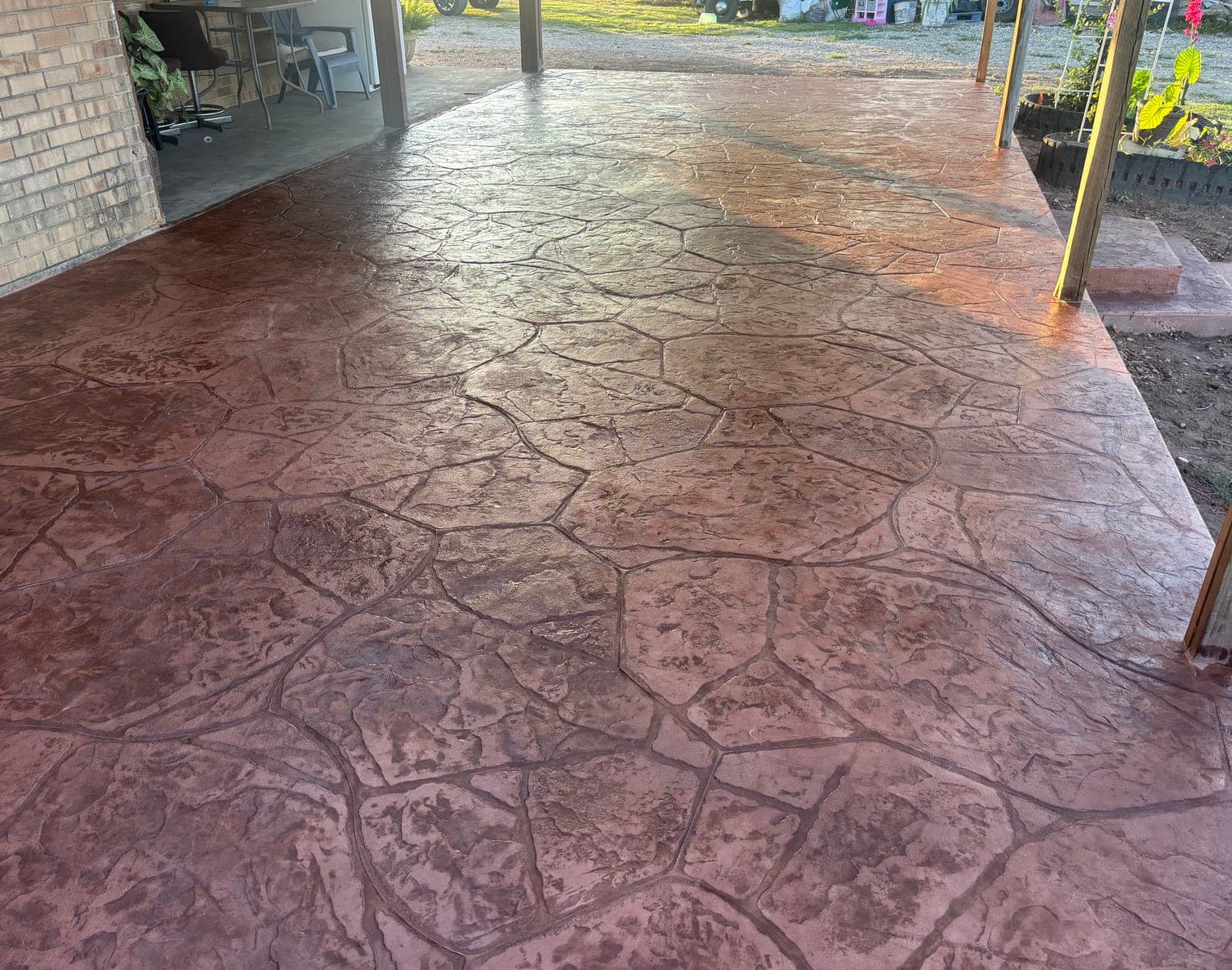
Which sealer depends on what you have. Stamped, stained, and colored concrete takes a topical acrylic sealer. It's what brings the color back when the patio looks dull, and it needs a fresh coat every 3 to 5 years. On an exterior surface, use one with an anti-slip additive; a glossy sealed patio gets slick when it's wet. Plain broom-finish concrete usually gets a penetrating siloxane sealer instead. It soaks into the concrete rather than sitting on top of it, doesn't change the look, and lasts years longer between coats than an acrylic does.
Timing is the part people get wrong. Sealer wants the slab between 50 and 80 degrees, never over 90, a dry surface going on, and no rain for 24 hours after. A 100-degree slab in July blisters the sealer before it bonds. A 40-degree morning in December leaves it tacky. A dry October morning after the dew burns off is about as good as North Texas weather gets for this, which is why fall is the season for it.
If the surface is past sealing, with flaking, pitting, or stains that won't wash out, a resurfacing overlay gives you a new surface on the existing slab, with the option to stamp or stain it while we're at it.
Fix the drainage before the fall storms
The low spots you found while washing matter more in fall than in summer. October averages close to four inches of rain in Mineral Wells, more than September, and water that sits on a slab or against the house finds its way under both. A shallow pool on an otherwise solid patio can be corrected with an overlay. A patio that slopes toward the house, or a section that has settled, needs regrading and a re-pour with a proper compacted sub-base. On a sloped lot, a concrete retaining wall is often what finally sends the water where it should go.
Two cheap habits help all year. Keep downspouts extended past the slab edge so roof water doesn't dump next to it, and keep the soil around the edges from drying out completely during drought. Clay that stays evenly damp doesn't pull away from the concrete.
The fall patio checklist
- Clear everything off the slab and wash it.
- Do the water test. Beads up: fine. Soaks in: reseal.
- Call us about hairline cracks before winter, and about anything wide, offset, or sinking.
- Reseal on a dry day between 50 and 80 degrees, no rain for 24 hours. Stamped or stained: every 3 to 5 years.
- Fix pooling and low spots before the fall storms.
- Set planters on feet so they don't hold water against the surface all winter.
Thinking about a new patio instead?
If the slab you have is undersized, sinking, or just past saving, fall is also the best pouring weather North Texas gets. Warm days and cool nights let a new patio or pool deck cure evenly to full strength, and a patio poured in September is ready for the whole outdoor season.
Whether it's a reseal, a resurfacing overlay, a sunken section, or a new patio, we'll walk the slab with you from Weatherford to Granbury, Stephenville to Mineral Wells, and give you a straight answer on what it needs.
Frequently Asked Questions
- Should I seal my concrete patio before winter in Texas?
- If water soaks in and darkens the surface instead of beading up, the old sealer is gone and yes, seal it before the first freeze. Sealed concrete sheds the water that would otherwise sit in hairline cracks and expand when it freezes. Fall is the best window in North Texas because sealers cure properly between 50 and 80 degrees, which rules out most of July and most of January.
- How often should a stamped concrete patio be resealed?
- Every 3 to 5 years for stamped, stained, or colored concrete. The topical sealer is what keeps the color rich and the surface from wearing. Plain broom-finish concrete goes longer between coats, and a penetrating sealer on it won't change the look at all.
- What temperature is too cold to seal concrete?
- Most sealers want the slab between 50 and 80 degrees, a dry surface, and no rain for 24 hours after. Below 50 the sealer cures slowly or not at all; above 90 it blisters and bubbles before it bonds. In North Texas that makes October mornings close to ideal and mid-summer the wrong time.
- Are hairline cracks in a concrete patio normal?
- Yes. Thin surface cracks come from the concrete shrinking as it cures and from the clay under it moving with the seasons, and a summer drought makes them more visible. Have them filled before winter so water stays out; it's a quick visit for us. A crack wider than a quarter inch, a crack with one side higher than the other, or a corner that is dropping is a different problem: the ground under the slab has moved, and sealing over it won't fix it.
- When is the first freeze in North Texas?
- Dallas–Fort Worth averages its first freeze around November 22, and Mineral Wells averages November 15, so out toward Weatherford, Gordon, and the rest of Palo Pinto County it comes about a week sooner. Plan to have cleaning, crack filling, and sealing done in September or October so the sealer has cured well before then.